
Key Takeaways
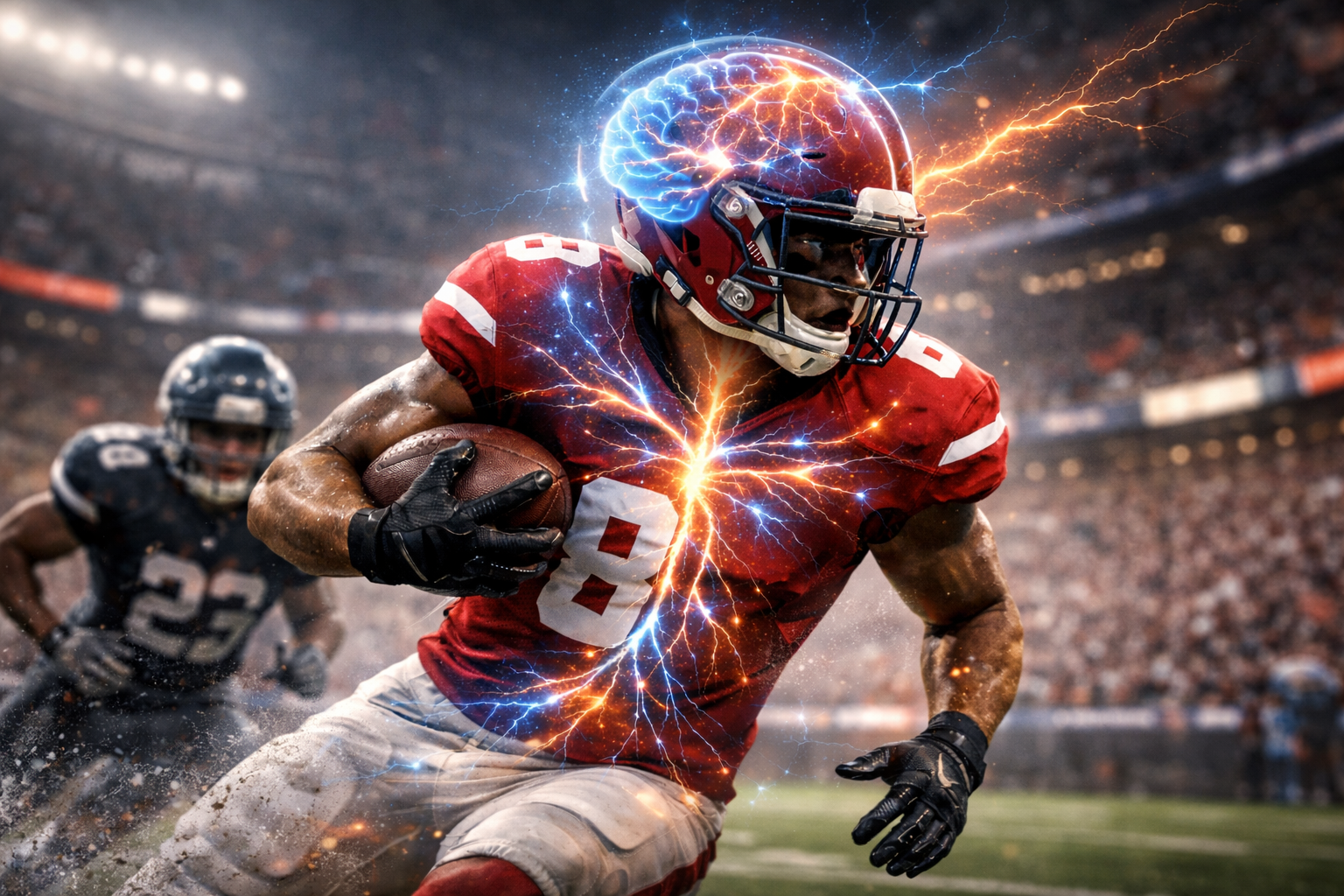
- Elite sport reshapes the autonomic nervous system (ANS), not just mindset or behavior.
- High-performance athletes develop exceptional activation capacity with reduced tolerance for low stimulation.
- Retirement, injury, or transition often trigger ANS dysregulation, not simple depression.
- Trauma-informed approaches, including EMDR and somatic therapies, are increasingly relevant for athlete mental health.
- Recovery requires physiological retraining, not just cognitive reframing.
Elite Sport, Identity, and the Nervous System
Philip Rivers’ bold return to the NFL for three games—this story can help us better understand athletes’ nervous system states and support athletes’ mental health.
It started a few weeks ago at the dinner table. My teenage son was talking about Rivers’ return to play, his age, resetting the five-year Hall of Fame clock, and the decision to return from retirement. Not long after, my dad brought it up during a phone call, describing the energy and hype in Fairhope, Alabama, near where I grew up. Rivers’ comment that he “misses the hits” stood out.
My dad reflected on his own football days—high school in Alabama and later as a recruit under Bear Bryant at the University of Alabama—before a career-ending injury. Even at 82, he vividly remembers a teammate delivering the first brutal hit in warm-ups to get the body ready.
As a mental health provider working with elite athletes, I found that these conversations highlighted an often-overlooked aspect of the autonomic nervous system (ANS): its physiological conditioning. Rivers’ return may have been about loyalty, role-modeling, or purpose—but physiology likely played a role as well.
How the Autonomic Nervous System Works in Athletes
The autonomic nervous system operates below conscious awareness. In simple terms:
- Sympathetic activation prepares the body for action (fight-or-flight, “the gas”)
- Parasympathetic activation supports safety, recovery, and restoration (“the brakes”)
Optimal mental health and performance are not about staying in one state, but about smooth transitions between states in response to context.
Research shows that elite training—especially in endurance, high-intensity, and collision sports—reshapes baseline autonomic balance. Athletes develop fast, efficient sympathetic activation and sport-specific parasympathetic control. Over time, nervous system responses tend to narrow rather than expand.
ANS functioning is often measured through Heart Rate Variability (HRV). Higher HRV is associated with resilience, adaptability, and flow states, while lower HRV is associated with anxiety, mood disturbance, sleep disruption, fatigue, increased injury risk, and overtraining. This is why HRV-based interventions are frequently used in athlete mental health work, and I especially appreciate being able to teach and use Heart Math in sessions.
Check out some sources at the end of this article, but here is a quick overview-
Dopamine, Arousal, and Performance Wiring
Neuroscience research shows that dopamine plays a role in drive and motivation.
In elite sport:
- Repeated high-stakes competition strengthens dopaminergic reward loops
- Dopamine becomes tightly linked with sympathetic arousal
- Anticipation of competition triggers dopamine and adrenaline surges
- Identity, regulation, and reward merge into one system
When sport suddenly stops:
- Dopamine levels often decrease
- The ANS loses a primary organizing rhythm
- Athletes report restlessness, irritability, flatness, and feeling “off.”
This state is frequently misdiagnosed as depression alone, when it more accurately reflects ANS withdrawal and dysregulation.
Stress Inoculation vs. Stress Sensitization
Sport is often described as “stress inoculation.”
Protective effects include:
- Improved stress tolerance in familiar performance contexts
- Faster reaction times
- Emotional suppression under pressure
Costs may include:
- Potential difficulty with emotional awareness
- Difficulty downshifting into rest
- Hypervigilance outside sport
- Heightened sympathetic reactivity to everyday stressors
In simple terms, athletes become highly skilled at managing one type of stress—and less adaptable to others.
Retirement, Injury, and ANS Dysregulation
Studies on injured and retired athletes consistently show:
- Increased autonomic instability
- Sleep disturbance
- Elevated cortisol rhythms
- Anxiety during rest periods
- Difficulty tolerating stillness
Sudden retirement tends to produce greater dysregulation than gradual transition.
Clinically, this aligns with a common experience: the body does not know where to put the energy. As Rivers noted, “My wife thinks I’m crazy because I miss the hits.”
Trauma-Informed Care and EMDR for Athletes
While not all athletes experience trauma, research increasingly shows overlap between elite sport and trauma physiology:
- Repeated bodily threat
- Pain normalization
- Suppression of fear signals
- “Play through” conditioning
This is why trauma-informed approaches—including EMDR, somatic therapies, and IFS parts-based work—are gaining traction in athlete populations.
From an EMDR perspective, persistent hyperarousal makes sense: the nervous system succeeded in that state. Without retraining, it defaults to what once worked.
Supporting Nervous System Recovery After Sport
Practical, evidence-based interventions may include:
- HRV biofeedback- Heart Math is a tool I often use in sessions and suggest practice outside of sessions
- Breathwork techniques
- Bilateral stimulation and EMDR to treat both sports and life trauma
- Somatic awareness and body-based regulation – for example, the SIFT (Sensation, Image, Feeling, Thought) check in
Elite sport reshapes the autonomic nervous system. Retirement or injury often brings a physiological recalibration challenge for elite athletes.
If we want athletes to thrive beyond performance, we must support their nervous systems—not just their motivation. I want to acknowledge that I am not presuming that Philip Rivers has any of these specific ANS responses, but I am grateful for his courage and the conversations his brief return to play brought to many people and age groups. I hope this psychoeducation about athlete mental health and the ANS will further promote more proactive care for athletes who are still competing, retired, and those in all the places in between.
Sources:
Stress inoculation training to control anxiety in sport: two case studies in squash – PMC