
Summary Points
- EMDR for athletes nervous system performance strengthens adaptive neural networks, enhancing access to optimal states
- Elite performance is driven by nervous system regulation, not just skill or mindset
- Heart-brain coherence (HRV) improves clarity, focus, and emotional stability
- HeartMath techniques are trainable tools for performance under pressure
- Athletes don’t lose ability—they lose access to regulated states
- Combining EMDR + coherence training creates repeatable peak performance conditions
This weekend, I had a dream come true.
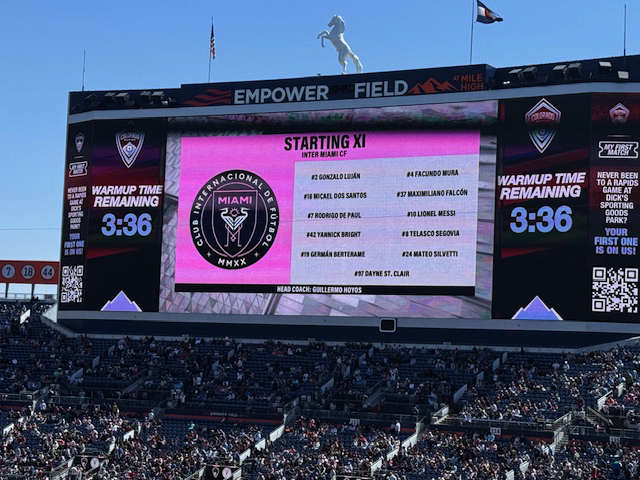
Like so many others in Denver, I experienced “Messi Mania” as Lionel Messi and Inter Miami CF came to town. I have watched Messi and many of his teammates play over the years, but seeing them live was incredible. The energy in the stadium was electric—one of those moments where you can feel the collective emotion of thousands of people at once. Being there with family and friends, I felt my heart full in a way that’s hard to put into words.
And interestingly, as both a therapist and a former athlete, I couldn’t help but notice… it wasn’t just emotional—it was physiological.
I’ve shared in past presentations that I have a Messi Inter Miami jersey that I’ve used as an example of a resource memory in Eye Movement Desensitization and Reprocessing (EMDR) therapy. It was a gift I received a few years ago. The moment I opened it, I felt a wave of joy in my body as it brought up all these memories of family supporting me as a competitive athlete (a memory network).
When I see it—or even touch it—it activates an entire memory network: connection, joy, feeling seen and supported, presence.

This is what EMDR describes as an adaptive neural network—interconnected experiences activated through sensory cues. What I felt in the stadium was a full-bodied, regulated, connected state.
And that’s where my work with HeartMath comes in.
The Heart, the Brain, and Performance
Research in heart rate variability (HRV) and nervous system regulation confirms something we see clinically every day:
When the heart, brain, and nervous system are synchronized, performance becomes:
- More fluid
- More focused
- More consistent
This state is known as coherence.
- It is measurable
- It is trainable
- It is repeatable
From an EMDR and performance psychology perspective, coherence is not just a wellness concept—it is a performance advantage.
My Daily Practice: Training Nervous System Coherence
As I encourage clients and athletes to practice HeartMath, it has become part of my own daily routine.
Through consistent practice, I observe:
- Greater mental clarity
- Stronger present-moment awareness
- Increased emotional stability
This work is not about eliminating stress.
It is about building flexibility in the nervous system—the ability to shift states quickly and effectively.
How I Integrate EMDR and HeartMath in Performance Work
1. At times Beginning and Ending Sessions
- Start with heart-focused breathing
- Regulate the nervous system before processing
- End sessions in coherence to support integration
This creates a safe, receptive state for deeper therapeutic work.
2. During EMDR Reprocessing
At times, I integrate HRV biofeedback during EMDR sessions.
This allows us to:
- Track real-time physiological responses
- Observe regulation shifts during processing
- Move beyond subjective reporting
This combination strengthens both awareness and regulation capacity.
3. Comparing States to Build Awareness
Also, recently I have compared:
- Heart-focused breathing
- Non-Sleep Deep Rest (NSDR)
Both are beneficial, but coherence-based practices consistently produced:
- Greater synchronization
- More performance-ready states
For athletes, this distinction is critical.
Why This Matters for Athletes
Athletes do not lose their skills under pressure.
They lose access to the state that allows those skills to emerge.
This is the missing link in traditional performance training.
Performance elements like:
- Flow
- Timing
- Focus
- Execution
…are all state-dependent.
When the nervous system is dysregulated:
- Reaction slows
- Decision-making declines
- Motor precision drops
When regulated:
- Performance becomes automatic and efficient
What Athletes Gain from Nervous System Training
By integrating EMDR and HeartMath, athletes can:
- Stay present under pressure
- Recover faster from mistakes
- Access consistent performance states
- Maintain emotional connection and confidence
This is not mental toughness.
This is nervous system mastery.
Bringing It Full Circle
Looking back, what stands out most from the weekend isn’t just the game.
It’s the state of being fully present—connected, open, regulated.
That same state is not accidental.
It can be trained.
- EMDR strengthens adaptive neural networks
- HeartMath trains physiological coherence
Together, they create a pathway to repeatable high performance.
That Messi jersey? It’s a simple object—but it unlocks a powerful internal state.
Now imagine accessing that state on demand—in competition, under pressure, when it matters most.
Final Thought
Elite performance doesn’t start in the mind.
It begins in the nervous system.