

Key Takeaways
- Collaboration outperforms single-provider work
- Nervous-system-based tools support resilience & identity
- Choice increases agency for athletes
- The future of care is integrative, not competitive
Introduction: EMDR for Athlete Performance in Context
In my work with athletes, coaches, and high performers, I often say, “There are many trails up the mountain.” That applies to performance, trauma history, mental health, nervous system patterning, and identity. This is also where EMDR for athlete performance enters the conversation, offering a trauma-informed way to address blocks and enhance sport outcomes and care for the athlete as a human first.
No one provider can offer everything. Collaboration gives athletes choice, voice, and care that reflects the complexity of being human under pressure.
Why EMDR for Athlete Performance Belongs in Collaborative Care
Athletes spend their lives being told where to be, how to train, and what to sacrifice. Choice becomes rare. When they step into mental performance or mental health care, choice matters.
Collaborative care allows athletes to:
- Select providers with complementary specialties
- Define goals that reflect performance and identity
- Move between services as needs arise
- Build a performance ecosystem around the whole athlete
I often serve as an adjunct provider, partnering with therapists, sport psychs, PTs, nutritionists, and team support staff. Many athletes are referred for EMDR-based performance work or other trauma-informed interventions. Once our goals are complete, they return to their primary provider with more clarity, nervous system regulation, and internal capacity.
Collaboration honors relationships and serves the athlete first.
EMDR International Association

This may look like a lot, and it wouldn’t all happen at the same time, but how incredible it is to have so many providers helping athletes’ mental health during different seasons of their careers.
Where Competition Gets in the Way of Athlete Healing
There is surprising competition within the mental health and performance field. (Maybe because many of us are from athletes with strong striving and competitive parts) It is important we do our own work as providers and even with extensive expertise continue to have consultation and multidisciplinary collaboration. Some providers fear referring out or maybe are stretched too thin with time to find specialty care and help bridge connection:
- “What if I lose the client?” “They won’t have time to schedule and meet with another provider- I’m in house.”
- “I should be able to help with everything.”
- “Specialty work makes me look insufficient.”
But collaboration isn’t a threat; it’s a sign of maturity. High stakes don’t just occur on the field — providers feel them too. When care becomes territorial, athletes miss trauma-informed support such as EMDR intensives, IFS work, or nervous-system-based tools that could accelerate performance changes and treat trauma.
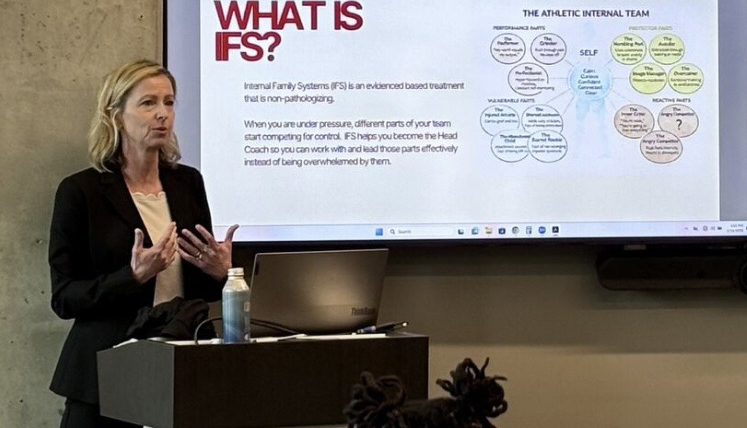
These reflections came fresh from an 18-hour IFS (Internal Family Systems) training I just finished this weekend where we explored therapist parts, competitiveness, and attachment dynamics.
How Trauma Shows Up in Sport
Trauma shows up more than people realize. It can look like:
- Performance blocks or “the yips.”
- Panic under pressure
- Freeze responses
- Repetitive choking cycles
- Loss of feeling or sensation
- Burnout masked as apathy or disconnect
Athletes benefit from trauma-informed care using:
- EMDR intensives for athletes & coaches
- IFS for identity transitions and parts conflict, for example the Inner Critic overworking
- HeartMath for nervous system coherence
- Polyvagal tools for regulation & resilience
These modalities don’t replace mental skills or therapy — they expand the toolkit. They move faster when needed, go deeper when appropriate, and work with the nervous system rather than forcing cognitive reframes alone.
A Healthier Model: The Referral Circle
An effective team-based model looks like this:
- Primary provider builds trust & foundations
- Specialists join briefly for focused trauma work (EMDR and IFS)
- Athlete returns to primary provider with increased capacity
The athlete wins.
The relationship wins.
The field gets stronger.
As a former Division 1 athlete, I used to guest-play with teams to be seen at showcase tournaments during my high school recruiting season. Collaboration made me better. I bring that same adaptability and specialized training into my clinical work.
The Future of Trauma-Informed Athlete Care
Athletes are openly seeking:
- Trauma support
- Identity transition care
- Nervous system-based performance tools
- Permission not to do everything alone
The more providers link arms, the more athletes thrive.
Many Trails Up the Mountain
Living in Colorado, climbing mountains is a big deal. Talking about 14-ers carries its own currency. Like athlete care, there are main routes — and alternate trails — and the choice matters. Climbing this altitude is not easy (14,000 feet) and comes with risk (similar to life as a high performer) so you want to make sure you pick the best route for your needs, you pick who you are climbing with and then know there will still be choices all along the way. Check out the photo from one of my 14-er hikes watching the sun come up after hours on the mountain- really breath taking!
Curious to learn more about the work I do? Reach out.