

When the Dream Changes
“React, don’t think. Trust your instincts.”
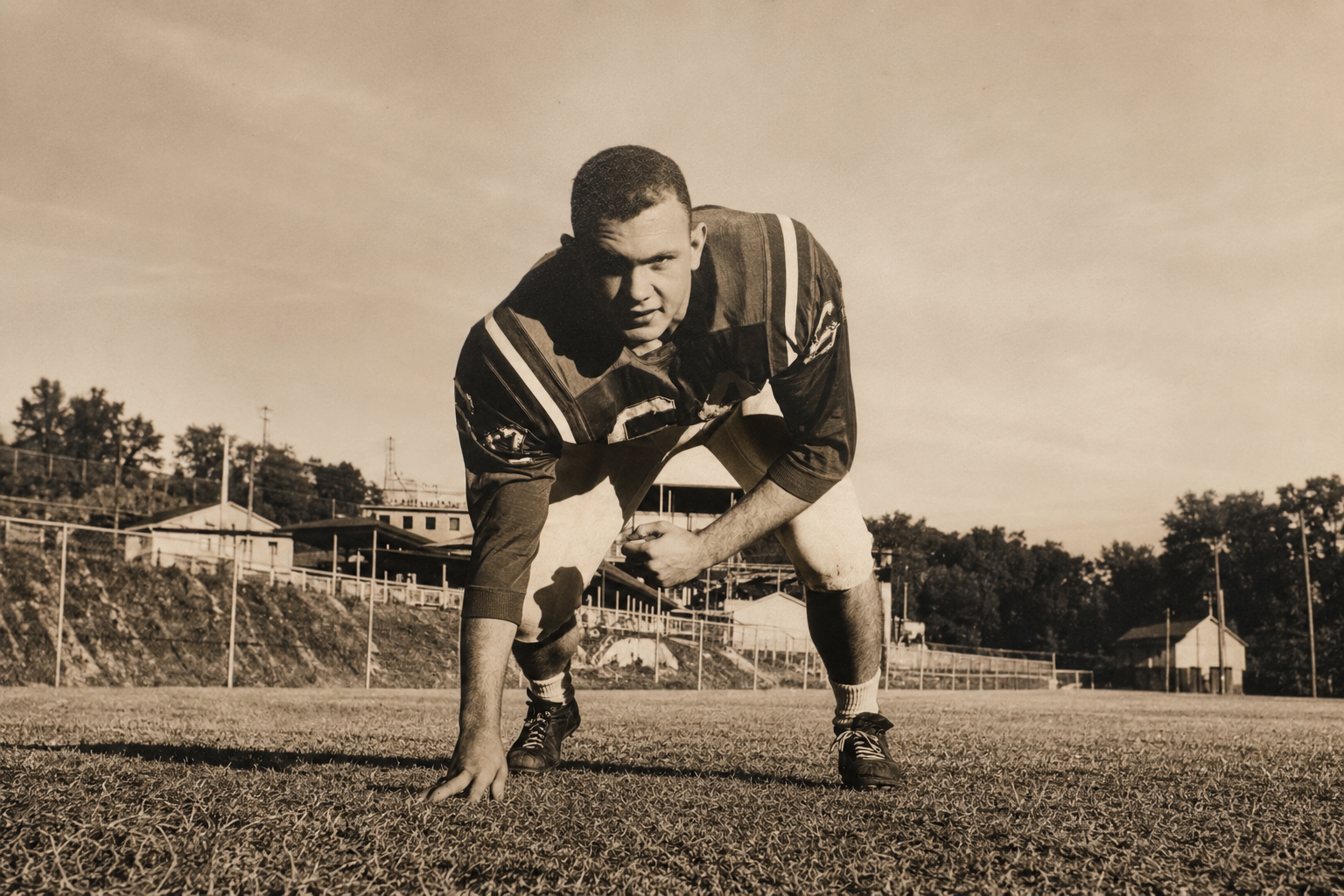
Those were the words a coach told my father on the final day of Spring football practice in pads at the University of Alabama. Seconds later, one step changed the course of his football career forever.
For many athletes, injury is viewed as a physical setback. Yet for others, it becomes something much larger—a turning point that reshapes their future, their relationships, and their sense of self.
This is a story about injury, recovery, loss, resilience, and the often-overlooked challenge of athlete identity after injury.
A Promising Football Career Interrupted
My father was one of few freshman players running the scout defense against the Joe Namath-led offense during the Fall 1962 season.
He was playing for one of the top football programs in the country under legendary coach Paul “Bear” Bryant. He had survived the demanding challenge drills of spring football, where coaches carefully observed which players would quit and which would keep fighting. This happened not too many years after the Junction boys spring camp (read about that if you don’t know the story.)
He remembers running through the landing nets, a drill not intended to be performed at full speed, at almost full speed; the competitive atmosphere pushed everyone to go faster.
Then it happened.
A toe in his cleat caught the rope.
He felt what he described as an “electrical shock and deep burning” in his leg.
Within moments, trainers were cutting off his pads.
Soon after, he was in the hospital.
Surgeries, Rehabilitation, and Silence
Doctors discovered significant nerve damage and attempted to repair it through surgery.
My father left the hospital wearing a polio leg brace and a lifted shoe. Before long, he and the coaching staff realized the procedure had not worked.
He could not feel his leg.
At one practice, coaches noticed that fire ants had covered the area below his knee. He felt nothing.
What followed were years of surgeries, rehabilitation, hospital stays, and relentless efforts to return to play.
Two summers were spent largely in the hospital.
“It was hard to be around the players on the team and not be participating,” he shared.
“Yet even harder was being around the high school recruits” he had helped bring to Alabama while still holding on to hopes of returning himself.
Like many athletes, he kept working.
He kept believing.
He kept trying to come back.
Eventually, a horseback-riding accident that fractured the same leg permanently closed that chapter.
The Messages Athletes Often Hear
My father was known for his speed and quickness.
He had trained relentlessly throughout childhood, jumping rope, boxing older kids, and competing in Alabama high school football games attended by tens of thousands of fans.
His identity was deeply connected to being an athlete.
During recovery, however, he often heard messages from doctors, trainers and coaches that many athletes still hear today:
- Don’t feel sorry for yourself.
- Don’t make excuses.
- Keep pushing.
- Keep working.
Those messages may build toughness.
But they can also leave little room for grief.
More than sixty years later, my father says he remembers the surgeries, the rehabilitation, the hospital stays, and the silence far more than the physical pain itself.
“I couldn’t address it. No coaches could address it with me. It was over with.”
Athlete Identity After Injury: What Athletes Need During Injury Recovery
My dad as I have always known him has a paralyzed foot and a “bad knee.” I grew up seeing the signed 1964 National Champions football on the family bookshelf. I knew my dad had played under the legendary “Bear Bryant” and as a young man when he realized his injuries prevented him from returning to play had transitioned to a recruiter for the team to be able to stay on scholarship. I have heard parts of this story all my life. Yet recently I listened not just as a daughter but as a clinician who specializes in athlete mental health and performance enhancement using EMDR therapy. I realized that many of the struggles my father experienced as a young man decades ago- injury, uncertainty, loss, and questions of identity still remain a reality for countless athletes in today’s sports landscape. I thanked my dad for his courage to journey back to this painful season of his life, and we did it with the hope that this story series will help others.
I asked him what he needed most during those years.
His answer was revealing.
Decades later, hearing former Alabama football coach Nick Saban publicly acknowledge a player’s career-ending injury brought him more healing. He paraphrased what he remembered of Saban speaking about Tyrone Prothro-
“We love him, he was an awesome player, and he’s not going to heal where he can play again.”
Someone finally said out loud what had never been spoken.
The loss mattered.
The athlete mattered.
The person mattered.
My father did seek help once from a guidance counselor during rehabilitation, but the experience was not helpful, so he never returned.
Today, athletes have access to resources that simply did not exist then.
Yet many still struggle in silence.
Why Athlete Identity After Injury Matters
Nearly sixty years have passed since my father’s injury.
Sports medicine has evolved dramatically.
Athletes now have access to sports psychologists, mental performance consultants, specialized counselors and social workers, and mental health professionals trained to work within athletic environments.
Yet some challenges remain remarkably similar.
Athletes still experience injuries that alter careers.
They still lose connection with teammates during recovery.
They still wrestle with uncertainty about the future.
Most importantly, many continue asking the same difficult question:
Who am I if I cannot play?
This question sits at the heart of athlete identity after injury.
When athletic participation becomes limited or ends entirely, athletes often discover that much of their identity has been built around performance, competition, and achievement.
The Role of EMDR Therapy in Injury Recovery
As a clinician, I find that my father’s story reinforces several important lessons.
Every Athlete’s Story Deserves to Be Witnessed
Dr. Gabor Maté reminds us:
“Trauma is not what happens to you; it is what happens inside you as a result of what happens to you.”
Often, the greatest suffering comes not from the event itself but from isolation and the absence of support for Athlete Identity After Injury.
Bonnie Badenoch, in The Heart of Trauma, describes how safety, presence, and connection help regulate and heal the nervous system after difficult experiences.
Processing Is Different from Reliving
Simply talking about painful experiences is not always enough.
Athletes often need structured, evidence-based approaches that help them process difficult memories without becoming overwhelmed.
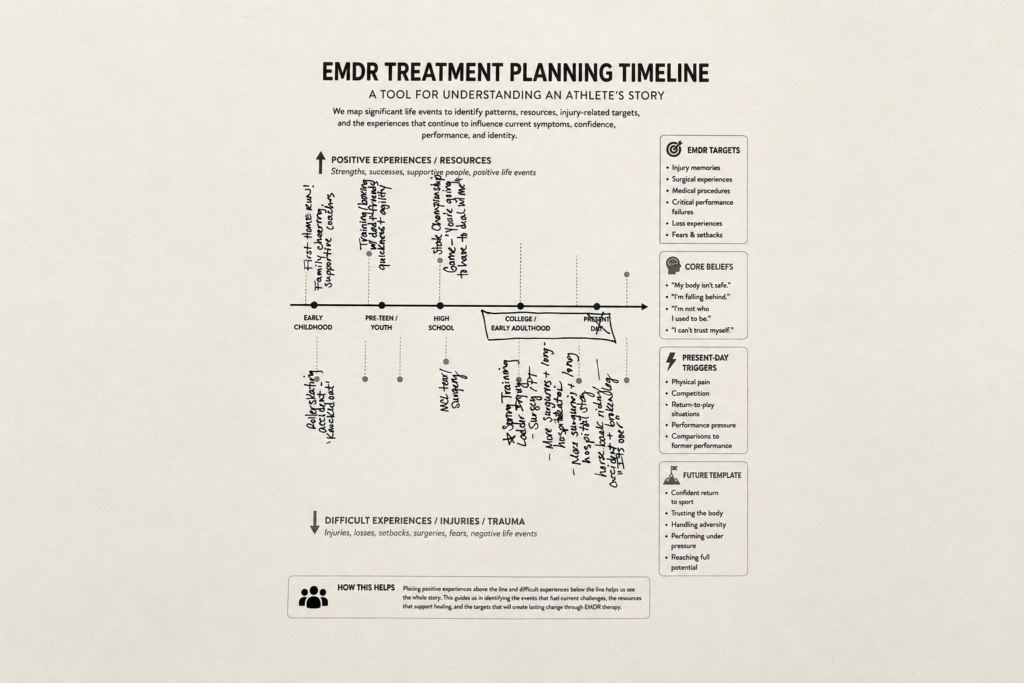
EMDR therapy can support athletes as they work through injuries, career transitions, performance-related experiences, and unresolved emotional challenges while remaining grounded in the present.
Connection Is a Powerful Protective Factor
Injury often separates athletes from the very people who provide support.
Teammates continue practicing.
Seasons move forward.
Roles change.
One of the strongest protective factors for mental health is connection, yet injury frequently creates isolation.
Athletes need opportunities to remain connected to teammates, coaches, family members, and supportive communities throughout recovery.
Connection helps athletes heal.
Isolation often magnifies suffering.
People Come Before Performance
One of the most meaningful lessons in my father’s story is that football was never the entirety of who he was.
When his athletic career ended, other parts of his identity remained.
He was still:
- An honor student
- A family member
- A student leader
- A recruiter
- A future professional
The athlete role mattered deeply.
It simply wasn’t the whole story.
Helping athletes recognize multiple sources of identity can strengthen resilience and support healthier transitions when circumstances change.
Breaking the Silence Around Athlete Mental Health
Fear of judgment, concerns about appearing weak, lack of specialized resources, and cultural expectations around toughness still prevent many athletes from seeking support.
These barriers continue to affect athletes at every level of competition.
The more openly we discuss injury, grief, identity, and mental health, the more opportunities athletes have to access the support they need.
Looking Beyond the Injury
My father’s story reminds me that while injuries happen in moments, their effects can echo across years and even decades.
When we create space for athletes to tell their stories, remain connected during recovery, and recognize the person beyond the performance, healing becomes possible in ways that extend far beyond sport.
Perhaps that is where athletics are changing most—not simply in how injuries are treated, but in how people are cared for when the dream changes.
How does the sense of self change, relationships, and roles? Those questions deserve their own discussion-
And that is where we will go next: the identity journey.
References:
Magness, S. (2022). Do Hard Things: Why We Get Resilience Wrong and the Surprising Science of Real Toughness. See Chapter 2, “Sink or Swim,” for a discussion of the Junction Boys story and the difference between enduring hardship and developing true resilience.
Maté, G. (2022). The Myth of Normal. “Trauma is not what happens to you; it is what happens inside you as a result of what happens to you.”
Badenoch, B. (2022). The Heart of Trauma: Healing the Embodied Brain in the context of relationships