
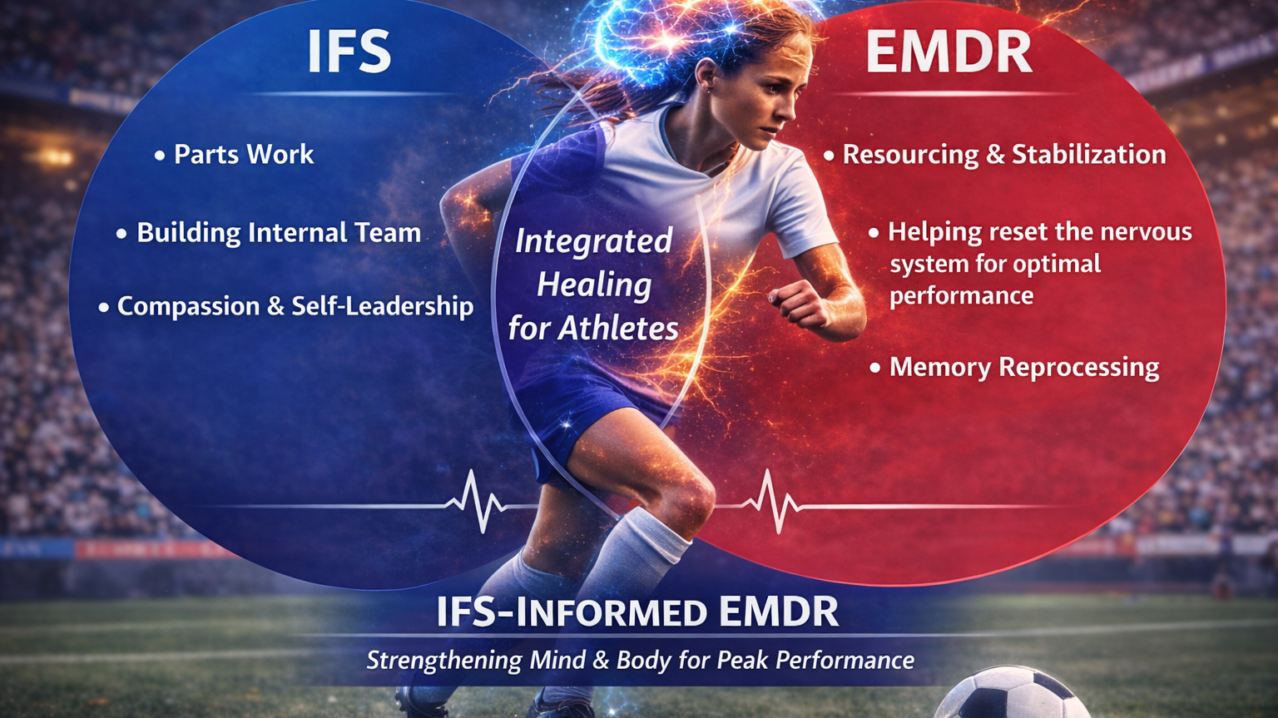
Key Takeaways Introduction: Why EMDR Therapy for Athletes Matters EMDR therapy for athletes is becoming an increasingly valuable approach for improving sports performance, confidence, emotional regulation, and consistency. Many athletes are familiar with traditional visualization techniques, yet struggle to see meaningful results—especially if anxiety, past injury, or fear of failure interfere. I was working with a college athlete last week,…
Key Takeaways When The Office Met My Subconscious I had a dream a few weeks ago that Stanley, from The Office, reached out to schedule a therapy appointment for his teenage daughter. I woke up with an odd sense of urgency to return a work call. As a therapist, I recognized the connection immediately—my brain was simply sorting through the…
Summary Points Integration of the left and right hemispheres is central to this human experience. It allows us to bring logic and emotion into balance and supports overall brain health. The brain integrates through the corpus callosum, a dense “bridge” of fibers connecting both hemispheres: When integration happens: Balanced communication between hemispheres supports mental clarity, emotional regulation, and trauma recovery.…
Summary: The Silent Impact of PTSD in Athletes “Unfortunately, psychological barriers have a much greater impact on more athletes than we even realize,” Mikaela Shiffrin shared. She has been transparent with the media about experiencing intrusive thoughts and PTSD symptoms after a serious crash during the giant slalom in November 2024. Sports-related PTSD is a vital but often overlooked part…
Summary The Legacy of Athletic Pressure Behind the highlight reels, medals, and contracts, many elite male athletes carry emotional and psychological burdens that physical training cannot resolve. Their mental challenges are often hidden by cultural narratives of toughness and silence. I often reflect on the story of my grandfather, Robert (Bob) Lock(e), an elite athlete a century ago. He pole-vaulted…