
Key Takeaways
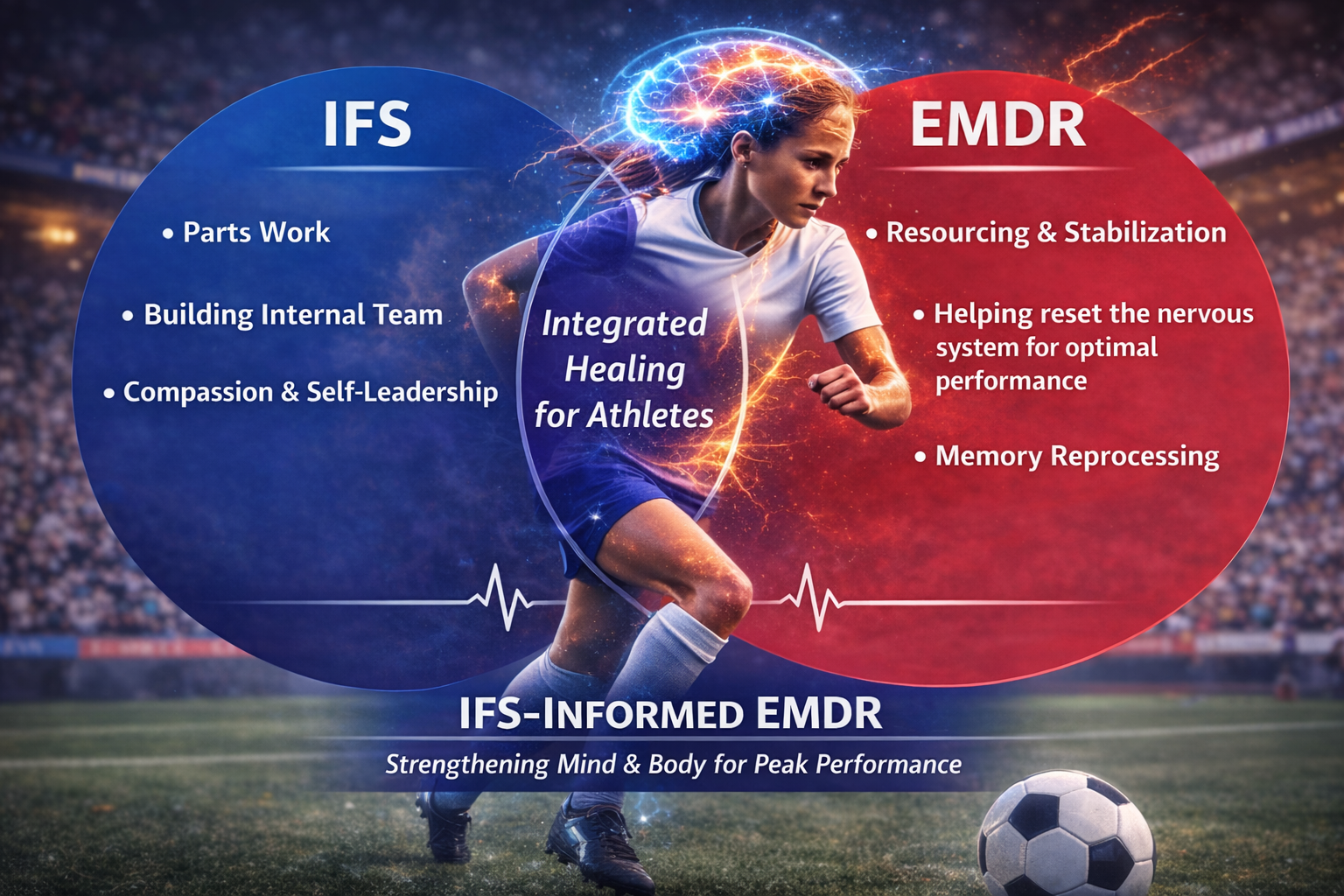
- Integrating IFS-informed EMDR for athletes and performers reduces internal conflict and improves performance consistency.
- “Parts work” helps athletes understand inner dynamics such as perfectionism, anxiety, and self-criticism without suppressing them.
- EMDR resourcing builds nervous system strength, supporting both healing and peak performance.
- Internal alignment allows EMDR to process trauma more effectively, especially performance-related stressors.
- Athletes experience improved focus, reduced emotional reactivity, and greater presence under pressure.
Understanding Internal Conflict in Athletes (IFS-Informed EMDR for Athletes)
Years ago, on a beautiful spring day in Bloomington, Indiana, the kind that pulls everyone out of the winter cold, my Hoosier teammate and roommate asked if I wanted to go for a walk. We were in the off-season—but still training—and I remember my immediate reaction: If anything, I should go for a run, not a walk, a walk felt unproductive, almost like a waste of time. But she wanted to walk, so I went. I remember feeling a little uncomfortable at first… and then surprisingly, I came back feeling really good. Looking back now, I can clearly see what was happening internally.
A highly driven, competitive part of me—the one that helped me become a Division I athlete—was almost repulsed by the idea of slowing down. To that part, the rest looked like weakness. Efficiency meant always pushing. That part had taken on a pretty extreme role. But that day, other parts showed up too: the part of me that valued being a good teammate, the part that enjoyed connection, and the part that could be present and take in the moment. And in choosing to walk, even when it felt uncomfortable, I gave those parts more space.
It was a small moment—but looking back, it was also a glimpse into how our internal system works, especially in high-performance environments.
How Internal Conflict Shows Up in Athletes (IFS-Informed EMDR)
This is often where I begin with athletes and performers—by understanding which parts are leading, which have been pushed aside, and how we can create a more balanced internal system before doing deeper EMDR work.
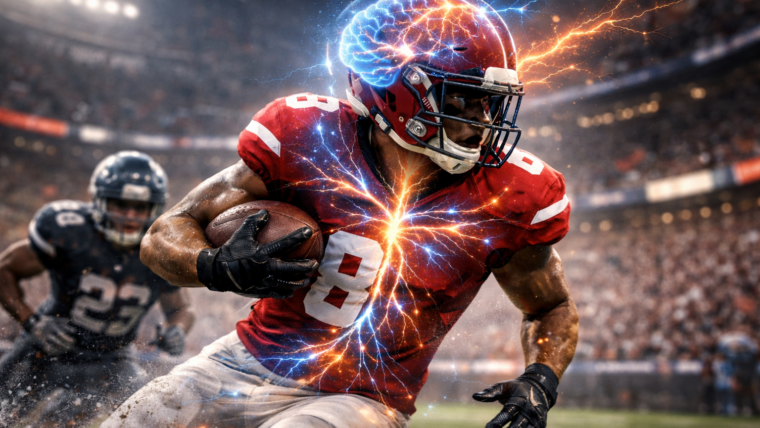
Here is another example- Imagine it’s game day. You look at the roster, and your name isn’t where it should be.
Immediately, a Part of you is livid—it feels like a betrayal of every early morning and extra rep you’ve put in. But almost instantly, another Part kicks in—the “Pro.” This part reminds you that the coach is under immense pressure, the stats didn’t align, and “it’s just business.”
In the athletic world, we could call this “mental toughness,” a part of the game, and feel like we need to just stuff it all down or do whatever it takes to move on. In therapy, we call this polarization. These two parts are now locked in a stalemate, burning the very energy you need to actually perform.
When we integrate IFS-informed EMDR for athletes and performers, we stop trying to “think” our way out of this conflict and start creating internal teamwork—where each part is heard, aligned, and working toward the same goal.
The Foundation: EMDR Resourcing for Athletes and Performers
One of the most important (and often overlooked) phases of Eye Movement Desensitization and Reprocessing (EMDR) work happens before we ever touch a difficult memory.
In EMDR, this is called resourcing—strengthening adaptive memory networks so your system has something solid to stand on when we begin processing.
I often describe this to clients like lifting weights for your nervous system. We’re building strength, flexibility, and resilience so that when we approach challenging experiences, you’re not overwhelmed—you’re supported.
This is also the Performance Enhancement zone of EMDR, where we strengthen resourced states, memories, and moments for optimal performance—an essential component of EMDR for athletes and performers.
Introducing IFS: Building an Internal Team for Peak Performance
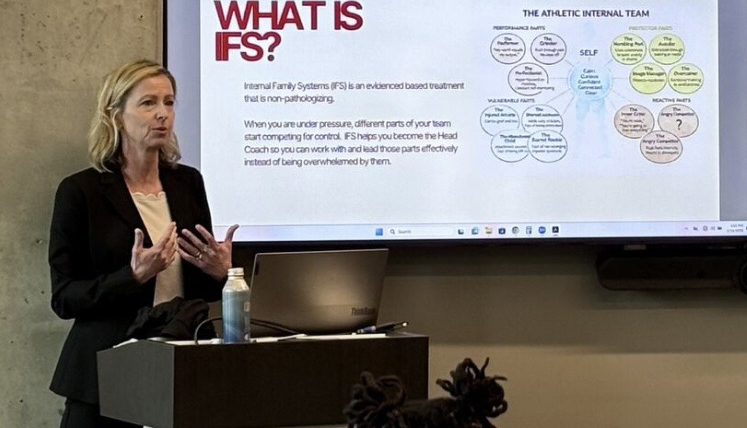
This is where I begin integrating Internal Family Systems (IFS), or parts work, when helpful.
We all have a team within us. Different “parts” of us take on roles over time—often in response to pressure, stress, injury, or performance demands. These parts are not problems to eliminate; they’re adaptations that, at one point, were trying to help.
You might recognize:
- A perfectionist part that pushes you to never make mistakes
- An inner critic that keeps you “on edge” to avoid failure
- A workhorse part that overrides exhaustion and keeps going
- An anxious part that scans for threats before competition
- An avoidant or numbing part that shows up after disappointment or injury
Even parts that use more extreme strategies—like impulsivity, shutdown, or substance use—are often trying to protect something deeper.
From Conflict to Collaboration: Healing the Internal System
In intensives, we slow this down.
We begin to build trust with your internal team, helping each part feel seen and understood. Instead of fighting or silencing these parts, we shift toward curiosity, compassion, and collaboration.
Over time, parts that were once extreme can soften when they no longer feel alone in their role. We also free up the energy that was previously consumed by internal conflict—energy that can now support performance, recovery, and emotional balance.
Why This Matters for EMDR Processing
This internal alignment is critical for effective EMDR.
When parts feel unheard or unsafe, they can block the processing of certain memories—especially those tied to:
- Performance failures or humiliation
- Injury or physical trauma
- Difficult dynamics with coaches, teammates, or organizations
But when the internal system is connected and cooperative, EMDR can do what it’s designed to do:
Help the brain and body reprocess and metabolize experiences so they are stored as past events—not ongoing threats.
Performance Benefits of IFS-Informed EMDR for Athletes
As this integration unfolds, athletes and performers often notice:
- Less emotional reactivity tied to past moments
- Reduced physical tension or “body memory.”
- Greater clarity and focus in the present
- More freedom to perform without the past intruding
You’re no longer competing with old nervous system patterns—you’re responding to what’s actually happening now.
You are also working to reset and change default nervous system patterns, helping the body spend more time in integrated, regulated, and optimal performance states.
A More Connected, Confident Performer
This integration of IFS-informed EMDR for athletes and performers allows us to move both efficiently and deeply—especially in intensive formats. It supports not just symptom relief, but a more connected, resilient internal system.
When this happens, parts of you are no longer trying to anticipate every possible scenario—
“What will the lineup be? What if I don’t perform? What if…?”
Instead, you feel more confident, curious, and present. Your internal team is aligned, ready to adapt, and working together toward your goals.
Next Steps: Exploring EMDR Intensives for Performance
If you’re curious about how IFS-informed EMDR can support your performance, recovery, or emotional resilience, consider exploring EMDR intensives for athletes, coaches, and performers.
This work is not about removing parts of you—it’s about helping your entire internal system perform as a cohesive, high-functioning team.