
Summary Points
- EMDR for athletes helps treat the yips and twisties by working with the brain and the body
- Performance anxiety often links to unresolved trauma and nervous system responses.
- Integrating past injuries + memories restores confidence + muscle memory.
- The freeze response impacts fine motor skills and decision-making.
- Treating the root prevents relapse and supports long-term performance.
Elite athletes experiencing the yips, twisties, or repetitive performance problems often feel confused about why their bodies stop cooperating during competition. EMDR for athletes provides a trauma-informed method to treat performance anxiety and nervous system dysregulation by integrating past high-emotion experiences. Imagine losing feeling in your fingers and toes and at the same time being asked to execute a demanding physical task at a high level which you have been able to previously execute. I believe this happens to elite athletes more often than we know. Recently I was working with two athletes reporting these symptoms related to performance anxiety and repetitive sports performance problems or the “yips.”
As we worked with EMDR (Eye Movement Desentization and Reprocessing) therapy to help calm the nervous system response and promote integration of past experiences that were still sending off the alarm responses in the present, I also offered psychoeducation to help them better understand the freeze response and how it has been working to protect their bodies. Their bodies were responding initially to a perceived need but later were still responding to threat that was no longer present. Experiences or events that carry high emotion and for some reason were not properly stored or integrated in the athlete’s body and brain are still seen as present in an athlete’s nervous system. EMDR helps with the body’s natural healing response to integrate the past events, so the past in no longer in the present felt experience of the body.
How EMDR Helps Athletes Overcome the Yips
The yips and twisties can emerge when unresolved memory networks trigger threat responses. EMDR therapy for athletes supports integration of these experiences so the past no longer overwhelms present performance.
High-emotion experiences that were never fully processed remain stored in the nervous system. When triggered, they override precision, muscle memory, and focus required for peak performance. Learn what EMDR involves. “Just as muscle memory develops through countless repetitions over time, it also records the collective injuries. Movements that approximate those involved in the original injury call up anxiety and muscle tension…The unconscious accumulation of these physical and emotional traumas in the athlete’s brain and body are the root cause of all significant performance problems.” (This is Your Brain on Sports by Grand and Goldberg)
Autonomic Nervous System Responses in Competitive Sports
When athletes detect physical or psychological threat, the autonomic nervous system activates fight, flight, freeze, or fawn responses. During freeze, blood flow shifts away from limbs, causing tingling, numbness, dissociation, and reduced fine motor control.
EMDR for athletes helps treat these nervous system patterns, allowing athletes to re-access trained motor skills.
Environmental cues (smells, light, sounds, body sensations) may reactivate memory networks that fuel performance anxiety.
Recognizing Trauma-Linked Symptoms in Athletes
Common trauma-linked symptoms mistaken for performance issues include:
- panic and anticipatory anxiety
- dissociation
- muscle tension
- brain fog
- negative self-talk
- fixation on sensations
- hyper/under-response to feedback
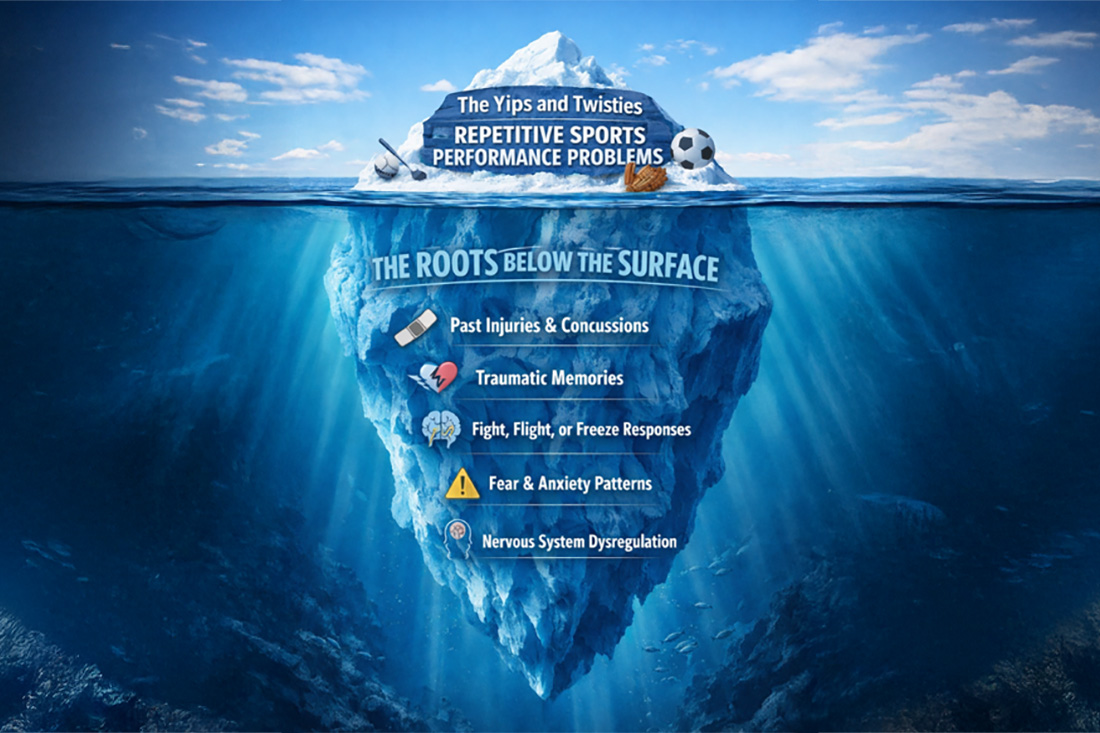
Treating the Roots Beneath the Iceberg
Visible symptoms (yips/twisties) are the tip of the iceberg. Often beneath the surface are unresolved injuries, concussions, medical trauma, public failure, pressure to perform, and emotionally significant memories. As anxiety or performance problems present the athlete often ends up in a cycle of struggle and the present struggle and performances add embarrassment and criticism which further stress the nervous system and the “Try Harder” approach of training more, trying to focus or relax, getting input from specialized coaches, leads to more frustration and hopelessness.
Without treating the root, alongside the presenting symptoms often the athlete continues to struggle. EMDR therapy for athletes supports nervous system resetting, trauma informed care, and reconnection with muscle memory, improving performance sustainability and most importantly treating the athlete as a human first and helping to promote healing for all lived experiences.