
Summary Points
- State-dependent learning in sports explains why training doesn’t always transfer to competition.
- Performance breakdown under pressure is often a state mismatch, not a lack of skill or discipline.
- The nervous system drives performance through fight, flight, or freeze responses under stress.
- EMDR for athletes helps reprocess performance blocks and regulate state under pressure.
- Training must include state simulation, not just technical repetition, to improve consistency.
What Is State-Dependent Learning in Sports?
State-dependent learning is a well-established principle in psychology:
We perform best when we are in the same internal state in which we learned the skill.
Your “state” includes:
- Nervous system activation (calm vs. stressed)
- Emotional condition (confident, anxious, pressured)
- Physiological markers (heart rate, tension, breathing)
- Focus and attention levels
When training and competition states match, performance flows.
When they don’t, even well-learned skills become harder to access.
This is the core of state-dependent learning in sports.
Why Athletes Struggle Under Pressure
Most athletes train and compete in very different states.
Training State
- Controlled environment
- Predictable conditions
- Moderate arousal
- Regulated nervous system
Competition State
- High pressure and stakes
- Increased arousal
- External evaluation
- Uncertainty
This mismatch creates a performance gap.
It’s not about effort, mindset, or preparation alone—
It’s about state access.
The Nervous System’s Role in Performance
Under pressure, the nervous system may shift into survival mode:
- Fight: over-effort, rushing, tension
- Flight: hesitation, avoidance
- Freeze: shutdown, heaviness, stuck feeling
In these states, the brain prioritizes survival over precision.
Additionally, competition can activate:
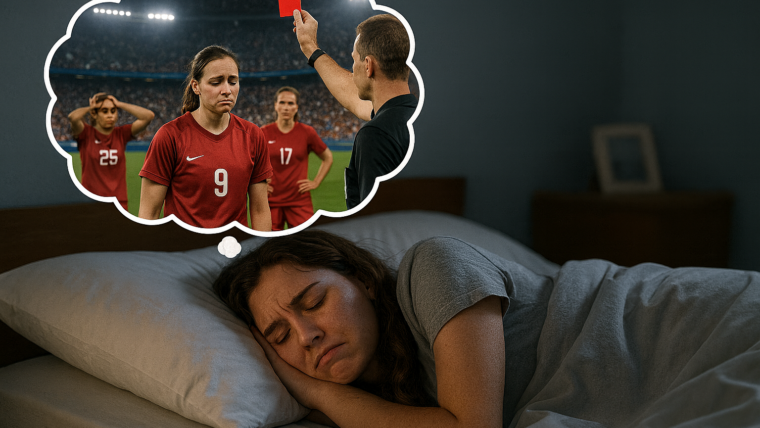
- Fear of failure
- Past mistakes
- Injury memories
- Shame or self-doubt
These are not just thoughts—they are physiological states that directly impact execution.
How EMDR Supports State-Dependent Performance
EMDR (Eye Movement Desensitization and Reprocessing) is a powerful, body-based therapy that works with how experiences are stored in the nervous system.
Unlike purely cognitive approaches, EMDR targets:
- Emotional memory networks
- Physiological responses
- State-linked patterns from past experiences
Through bilateral stimulation (BLS), EMDR helps:
- Access stored performance-related experiences
- Reprocess them so they are no longer linked to the threat
- Increase nervous system flexibility under pressure
In practical terms, EMDR for athletes helps shift the state associated with performance, not just the mindset.
Applying State-Dependent Learning in Sports
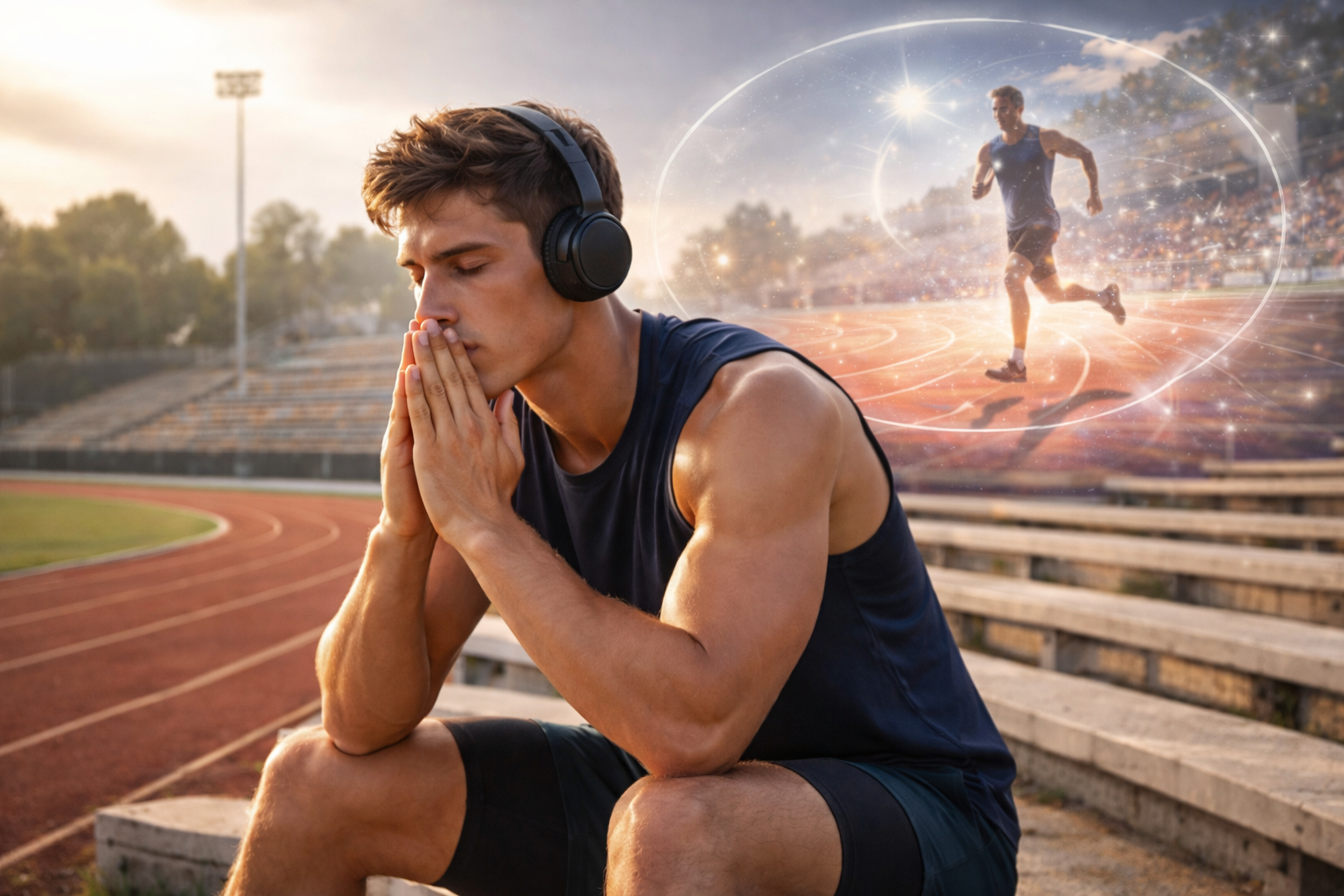
1. Visualization That Matches Performance State
Visualization is most effective when it reflects real competition conditions.
Upgrade your approach:
- Add pressure, intensity, and stakes
- Include physical activation (movement, breath, posture)
- Practice in multiple emotional states
Train the state—not just the skill.
2. Using the Future Template in EMDR
The EMDR future template helps athletes rehearse desired responses in upcoming situations. This is supporting neuroplasticity and offering a neural “roadmap” for the direction they want to go; including what the athlete wants to be thinking, feeling and noticing in their body.
This process:
- Activates the future performance context
- Pair it with a regulated, adaptive state
- Builds familiarity before real competition
Result: reduced gap between training and performance states.
3. Reprocessing Performance Blocks
Past experiences (missed shots, injuries, failures) often carry a strong emotional and psychological charge.
EMDR helps reprocess these experiences, so they are no longer linked to a threat-based state. This is powerful when athletes experience this change. Often there is so much frustration linked to not being able to outwork, outthink, out self-talk this state- hopelessness and apathy can creep in and then experiences stack in associated memory networks that are not adaptive.
These can trigger:
- Tension and tightness
- Hesitation
- Overactivation
- Loss of confidence
EMDR helps reprocess these memories so they no longer trigger threat responses.
The memory remains—but the state changes.
And when the state changes, access to performance improves.
The Performance Edge: Training State, Not Just Skill
Athletes who integrate state-based training tend to:
- Access skills under pressure
- Stay adaptable instead of rigid
- Recover faster from mistakes
- Perform with greater consistency
Without it, athletes often feel:
- Inconsistent in competition
- Frustrated by performance gaps
- Confused about why practice doesn’t translate
Consistency is not just repetition—it’s state alignment.
Mental Health and Performance Are Connected
State-dependent learning also explains common mental health patterns in athletes:
- Fluctuating confidence
- Repeating anxiety in specific contexts
- Insight without behavioral change
By working with the nervous system, athletes can:
- Improve emotional regulation
- Access adaptive states more consistently
- Enhance both performance and well-being
Key Takeaways for Athletes
- Train in the state you expect to compete in
- Use visualization with realistic emotional and physical intensity
- Track your internal state during practice and competition
- Practice intentional state shifts (breathing, movement, grounding)
- Address unresolved performance experiences if you feel stuck or inconsistent